
The best pelvic floor app for you depends on what would help you keep coming back: a friendly voice, a simple prompt or games with sensor feedback. Here’s how Happy Floor, Squeezy, Kegel Trainer, Perifit and Elvie compare, including a free option.
Find your fit
Which option sounds like you?
Compare the options
UK prices and published features checked on 13 September 2026. These are different kinds of support, not a clinical ranking. Follow each product link for current terms.
| Option | What it offers | Cost | Keep in mind |
|---|---|---|---|
| Happy Floor ↗iPhone · our app | Narrated sessions, Control exercises with submaximal contractions and full release, tutorials and a progression plan. | Free download; subscription for full access. Check the in-app offer. | No sensor feedback; recurring cost for full access. |
| Squeezy ↗iPhone; Android via Squeezy’s website | Exercise prompts, reminders and an adjustable plan. | £3.99 on the UK iPhone App Store. | No sensor feedback. Clinic-connected Squeezy Connect is separate. |
| Kegel Trainer ↗Olson Applications · iPhone and Android | Short guided workouts and discreet exercise cues. | Free tier with paid upgrades; offers vary. | Check which reminders and settings your chosen tier includes. |
| Perifit Care ↗Internal device + iPhone or Android app | Sensor feedback through games controlled by contractions. | £119 for Care; companion app free. | Requires insertion, cleaning and a suitable place to use it. Care+ is a different model. |
| Elvie Trainer ↗Internal device + iPhone or Android app | Sensor-guided workouts with a moving on-screen target. | £169 for the trainer; check current purchase terms. | Requires insertion, cleaning and charging. Check suitability before buying. |
| NHS information + a phone reminder ↗Web guidance · any phone with reminders | Written guidance and a physiotherapist’s exercise video. | Free. | You organise the routine yourself; a reminder cannot check technique. |
Happy Floor: engaging audio guidance
Choose it if: you want your exercises to feel less like a chore, with a friendly voice to guide you through them.
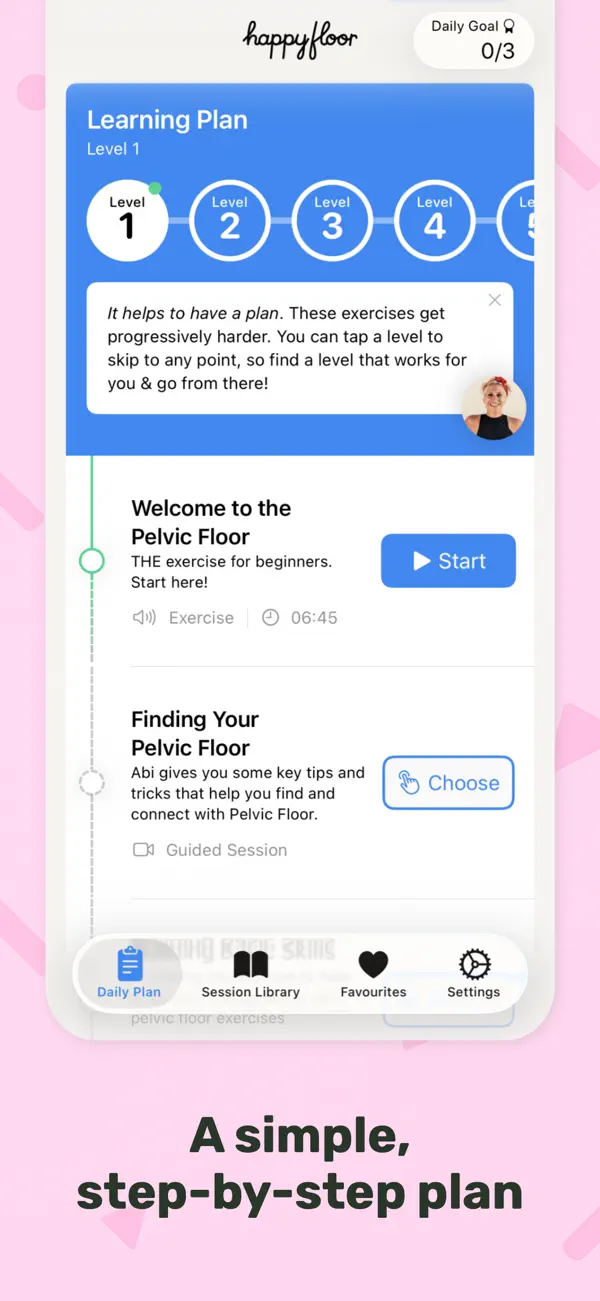
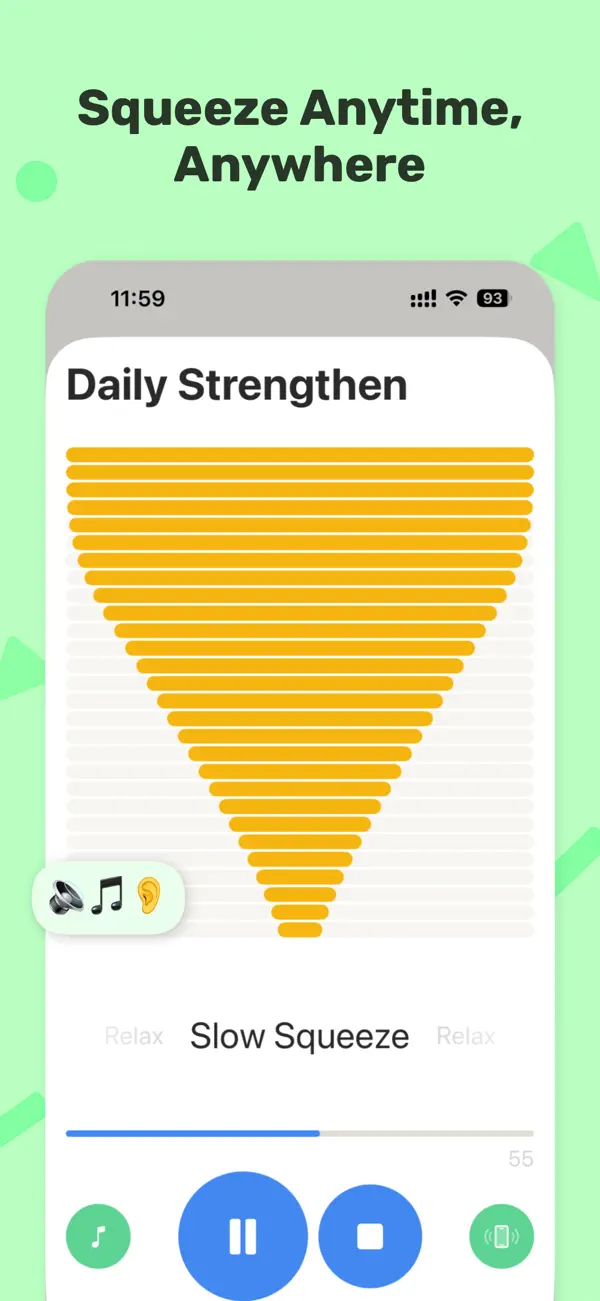
Happy Floor’s learning plan and audio exercise screen. Images: Happy Floor on the App Store.
You know you should do your pelvic floor exercises. Wanting to do them is another matter. That’s the idea behind Happy Floor: make your daily squeezes more bearable. Dare we say, fun.
Think Headspace-style guidance for your pelvic floor. Pop your headphones on and let a friendly voice talk you through the session, with encouragement along the way.
Control guides submaximal pelvic floor contractions with a full release between each contraction. Submaximal means less than your maximum effort. It offers structured practice of graded effort and release; the app guides you without measuring the contraction or confirming relaxation.
The Daily Squeeze gives you a different audio exercise each day. There’s also a progression plan to follow and video tutorials when you want to see things explained.
Why choose it: you can put your phone down and follow along. The voice does the counting, leaving you to concentrate on the exercise.
Cost and availability: iPhone; free to download, with a subscription for full access. Check the current price and trial offer in the app.
Keep in mind: if you only want a simple prompt, you may prefer a lower-cost option. Happy Floor guides the session without an internal device; it doesn’t measure your contractions.
Download Happy Floor for iPhone →
Squeezy: reminders and an adjustable routine
Choose it if: you want prompts and records for a routine you can adjust with your pelvic health specialist.
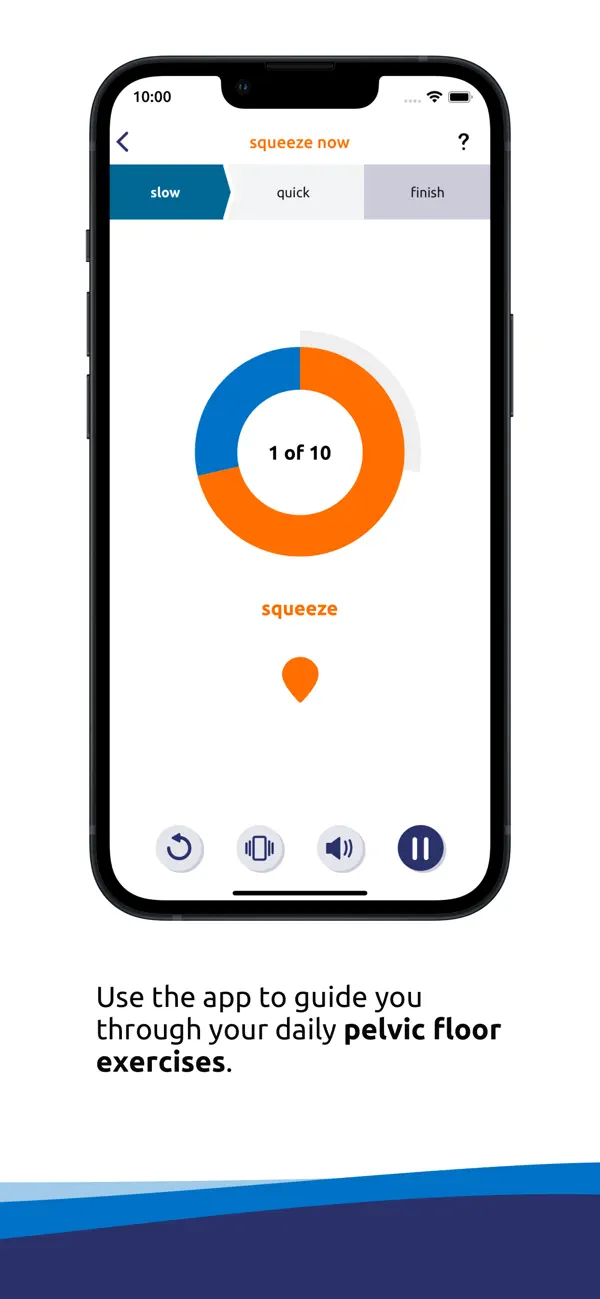
Image: Squeezy / Living With, via the App Store.
Squeezy’s UK iPhone listing describes visual and audio prompts, reminders, exercise records and a bladder diary. Its professional mode lets you adjust the plan when working with a pelvic health specialist.
Why choose it: if you know what you’re meant to do and want a straightforward way to follow and record it, those features are a sensible starting point. Its audio prompts are useful if you’d rather not watch the screen throughout.
Cost and availability: £3.99 on the UK iPhone App Store; Squeezy’s website also links to Android.
Keep in mind: exercise records tell you what you’ve logged, rather than measuring the contraction itself. If you need your clinician to see your records remotely, look at Squeezy Connect. That is a separate, clinic-funded version; buying the ordinary app doesn’t automatically connect it to your physiotherapist.
Kegel Trainer: short sessions with discreet cues
Choose it if: you prefer brief sessions and visual, audio or vibration cues, with a free tier to explore.
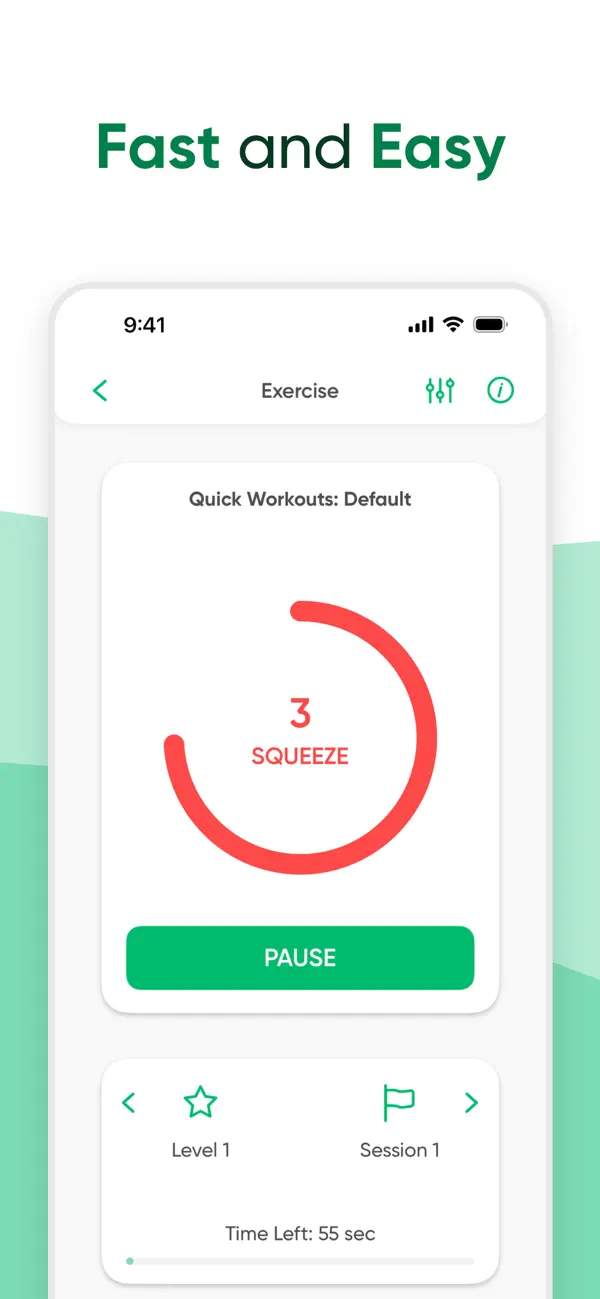
Image: Kegel Trainer / Olson Applications, via the App Store.
There are several similarly named apps. Here we mean Kegel Trainer PFM Exercises by Olson Applications, whose iPhone listing describes short sessions with visual, audio or vibration cues, plus reminders and exercise streaks.
Why choose it: you can follow a quiet cue when spoken narration wouldn’t suit the moment. Short sessions also give the routine a clear beginning and end.
Cost and availability: iPhone and Android; a free tier with paid upgrades. Check the offer on your platform.
Keep in mind: check which settings and reminders are included in the tier you’re choosing. The store lists several purchases, so a free download isn’t a promise that every advertised feature is free.
There’s also an Android version. Its current description includes broader workout plans; don’t assume every feature or paid offer is identical across the two platforms.
Perifit Care: games with sensor feedback
Choose it if: you like the idea of controlling a game with your contractions and are comfortable using an internal device.
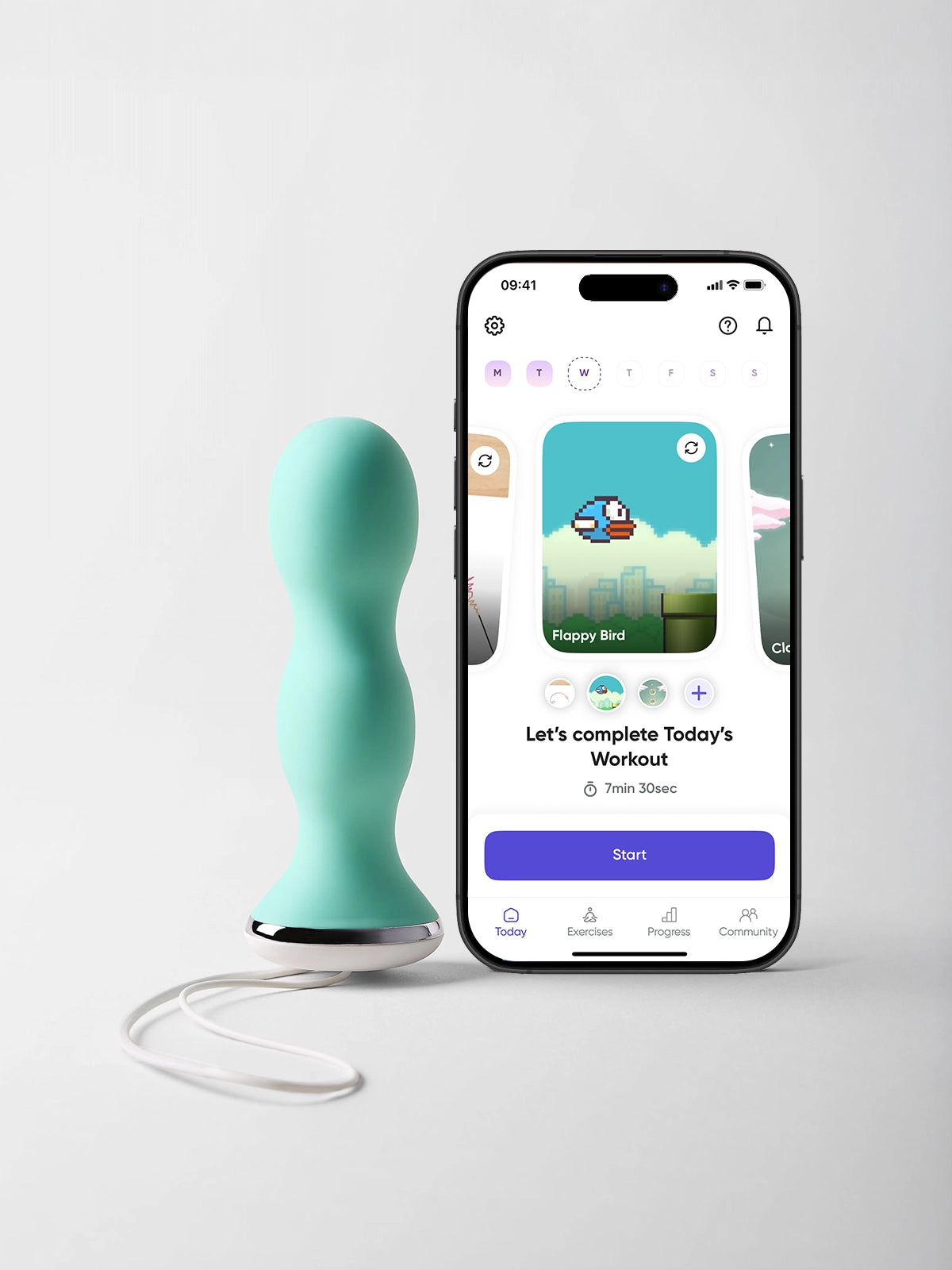
Perifit Care pairs an internal vaginal device with a free app for iPhone and Android. Contractions control the games, with sensors providing feedback.
Why choose it: if seeing your effort change something on screen appeals to you, this is a different experience from following a countdown.
Cost and availability: £119 for the original Care device, with a free companion app for iPhone and Android. Care+ is a separate product.
Keep in mind: factor in the actual setup. Perifit’s first-use instructions involve cleaning, insertion, Bluetooth connection and calibration. You’ll need a place where that feels comfortable, not just a spare minute and a phone.
The manufacturer advises against using the device during pregnancy, and says to return after childbirth only after the stated recovery period and healthcare clearance. Those restrictions concern the device; they are not a blanket instruction to avoid pelvic floor exercise.
Elvie Trainer: sensor feedback with visual targets
Choose it if: you want to follow on-screen targets with feedback from an internal device.
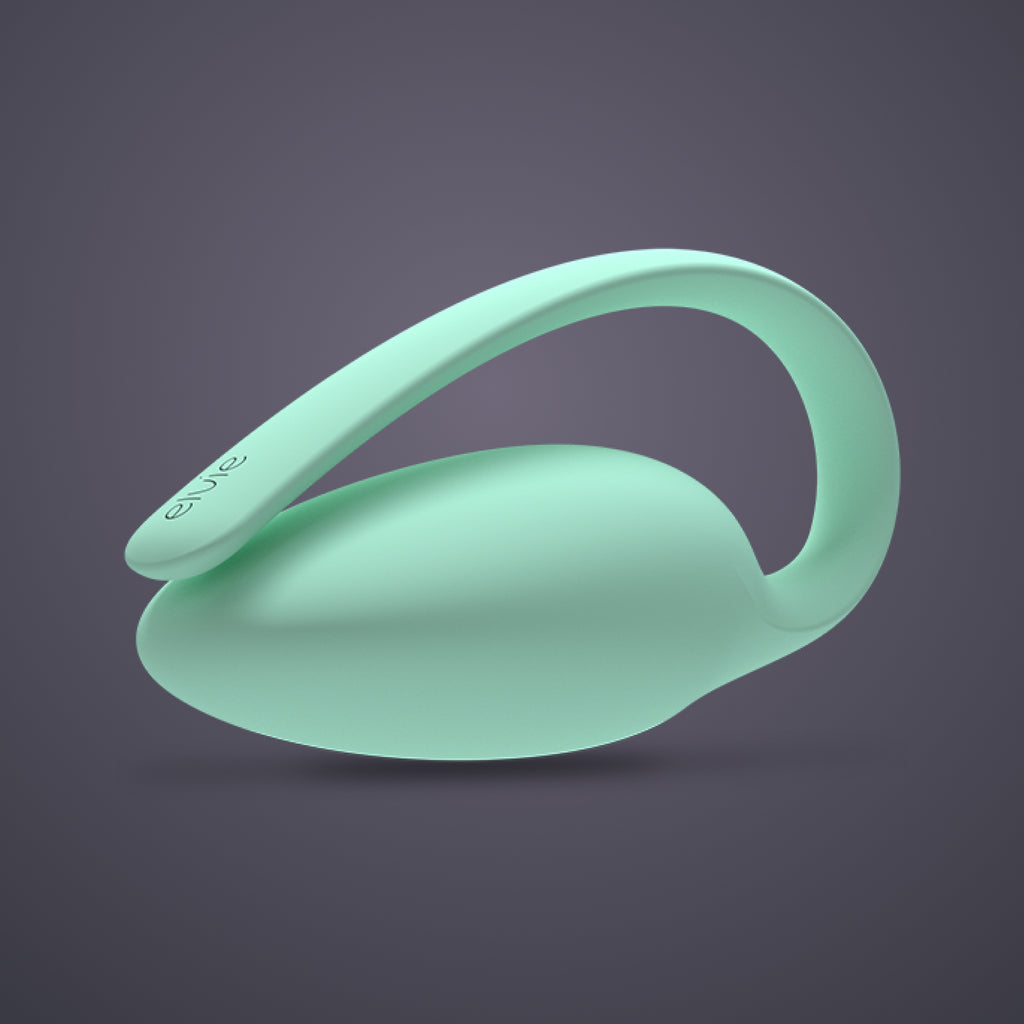
Elvie Trainer also uses an internal vaginal device connected to a phone. Its app visualises contractions through a moving target and guided workouts. The product includes a charging case and an optional sizing cover.
Why choose it: you may prefer this target-based exercise format when choosing sensor feedback. The choice here is largely about which format you prefer.
Cost and availability: £169 for the device, used with its companion phone app. Check current stock and purchase terms.
Keep in mind: it still means inserting, cleaning and charging a device. Elvie advises checking with a health professional before purchase if you have a pelvic health condition, and waiting for approval after childbirth. Check the current return terms too: an intimate product may have restrictions once opened.
Free guidance: a routine you organise yourself
Choose it if: you already have an appropriate routine and mainly need a reminder to do it.
Why choose it: the NHS has free written guidance and a physiotherapist’s video. Pair it with your phone’s ordinary reminder and there’s no extra app to buy or subscription to manage.
Cost and availability: free NHS web guidance, plus the reminder function on your phone.
Keep in mind: you set up the habit yourself. There’s no narrated programme or device feedback bundled in.
What kind of help do you need?
For a more specific comparison, explore apps for stress leakage, pelvic floor support after birth or bladder diaries. Our app comparison hub brings them together.
Think about the moment you’ll use it. Do you want to put headphones on and follow a voice, glance at a prompt, or set aside time for a device? Pick something that fits the time and space you actually have.
A sensor answers a different question from a reminder. A reminder prompts you to practise; biofeedback provides information while you practise. Neither is the same as a clinician assessing your symptoms and deciding what support you need.
The NHS’s treatment guidance describes limited good evidence for an additional benefit from biofeedback alongside pelvic floor muscle training, while noting it may help some people stay motivated. A higher price and more sophisticated feedback don’t automatically mean a better outcome.
When an assessment is the better next step
If exercises hurt, you struggle to relax, or you aren’t sure you’re using the right muscles, don’t choose an app simply because it offers a harder level. Royal United Hospitals Bath explains that an overactive pelvic floor can have difficulty relaxing and may need a different approach from more strengthening.
A GP or pelvic health physiotherapist can help you work out what’s appropriate. Our Pelvic Floor Problems 101 guide explores the distinction between weakness, pain and other pelvic floor problems. If sudden urgency is the main issue, our guide to strong urges to pee covers that more specific conversation.
Which would we choose?
If reminders are the missing piece, Squeezy is a straightforward option to consider. If you prefer short sessions with discreet cues, look at Kegel Trainer. For feedback from an internal device, compare Perifit’s games with Elvie’s visual targets. Think about the setup and what you’d feel comfortable using.
If you’re bored of doing your exercises, we’d choose Happy Floor. We built it for that feeling: you know you should do them, but counting through another set isn’t much of a draw. A friendly voice and a different session each day can make those few minutes more enjoyable.
Download Happy Floor for iPhone →
Free to download. Full access requires a subscription; check the current in-app offer.
A few practical questions
Is there a free pelvic floor exercise app?
Kegel Trainer has a free tier with paid upgrades. You can also use free NHS guidance with your phone’s reminder. A free download isn’t always a free programme: Happy Floor requires a subscription for full access, while Perifit’s free companion app needs its paid device.
How is Happy Floor different from Squeezy?
Happy Floor centres on engaging narrated sessions, a Daily Squeeze, a progression plan and Control exercises that guide submaximal contractions with full release between efforts. Squeezy provides exercise prompts, reminders and an adjustable routine. Both offer audio support; the useful distinction is whether you want a narrated exercise experience or prompts for following your plan.
Do I need an internal pelvic floor trainer?
An internal device isn’t required to use Happy Floor, Squeezy or Kegel Trainer. Perifit and Elvie add sensor feedback. If you’re unsure whether you’re contracting correctly, a pelvic health physiotherapist can help you decide whether feedback would be useful.
What should I check before paying?
Check what’s included, whether payment is one-off or recurring, and any trial’s renewal price and cancellation terms. For a device, also check suitability, phone compatibility and returns. The prices above are a UK snapshot, so follow the product links for the current offer.
Sources & editorial notes
Prepared by Daniel Morgan from official product pages, UK App Store listings, Google Play and the health sources linked here, checked on 13 September 2026. We compared session format, routine support, sensor feedback, platform availability, cost and practical setup. The shortlist describes who each option may suit. We sell Happy Floor. This is a researched feature comparison, not independent hands-on testing or a head-to-head clinical study. Prices are a dated snapshot; device models, platform features and subscription offers can differ. We have not verified individual in-app checkout offers or independently clinically reviewed this article.
- Apple App Store UK: Happy Floor: features and subscription information ↗
- Apple App Store UK: Squeezy: features and purchase price ↗
- Squeezy: product website and download links ↗
- Squeezy: what is Squeezy Connect? ↗
- Apple App Store UK: Kegel Trainer PFM Exercises by Olson Applications ↗
- Google Play: Kegel Trainer by Olson Applications ↗
- Perifit UK: Perifit Care product information and price ↗
- Perifit: first-use instructions ↗
- Perifit: medical questions, pregnancy and postnatal use ↗
- Elvie UK: Elvie Trainer product information and price ↗
- NHS: non-surgical treatment for urinary incontinence ↗
- NICE NG210: pelvic floor dysfunction recommendations ↗
- Royal United Hospitals Bath: relaxing the pelvic floor ↗
- NHS: 10 ways to stop leaks, including an exercise video ↗
Written by Daniel Morgan. Happy Floor publishes this comparison and sells a pelvic floor exercise app. Product names belong to their respective owners.
Found something that needs correcting? Let us know.